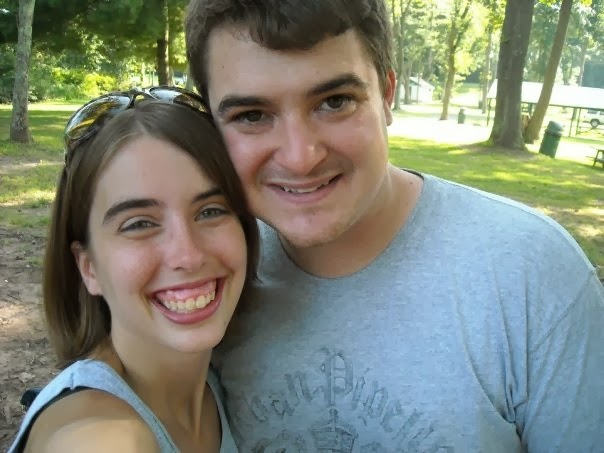
In week 2 of my third class, we will be discussing the importance and long-lasting effects of relationships on child development. This calls for me to reflect on my own relationships I participate in for my own life. In my opinion, relationships and partnerships are one in the same; it is important for all parties involved to partake and be a team player in order for any relationship or partnership to work and be effective. A relationship requires a give and take, an understanding, compromise, time, and care. Throughout my life I have been very fortunate to be surrounded by and be a part of various positive and influential relationships. Five people in which their relationships have had a positive influence or been an important part of my life will be discussed in detail below, including my parents (mom and dad), brother (Ryan), best friend (Jessy), boyfriend (Michael), and dog (Duke).
-----------------------------------------------------
The first relationship that has been a positive influence in my life would be the relationship I share with my parents. My parents have always been there for me, always been firm but fair, loving, caring, encouraging, understanding, supportive, and so much more. My dad and I have always shared a bond via sports. We are a huge sports family and many fond memories come from times we worked together in our back yard or when he was coaching my softball team through the years. He always knew how to challenge me but support me at the same time and was my biggest fan. My mom and I have always been very close and I love that I can say now she is one of my best friends. She has always been my shoulder to cry on, ear to listen, and the best advice giver around. First and foremost, she was my mom and at times I did not like what she had to say but now I appreciate her so much more. My parents have showed me how to raise a child, how to persevere through challenges and difficult times, how to take care and love one another, and so much more. I will always be grateful for the life they provided for me and how they raised me, as well as how they continue to support me in every life decision I make, even at 27 years old and not living at home. I love them both and I feel very lucky to have such wonderful parents.
The second relationship that has been a positive influence and partnership is the one I share with my younger and only brother, Ryan. Ryan and I are almost 7 years apart. I still remember the day I found out I was going to be a big sister - I was so excited I couldn't stop talking about it! I went into my Kindergarten classroom the next day and drew a big picture and told everyone all about it. I couldn't wait to be a big sister. When my brother was born, I immediately wanted to be the helper. He was my little buddy right away and I loved it. There were times through the years that he absolutely, positively drove me bonkers but at the end of the day I couldn't be more grateful for him. We have always been close and again I feel lucky to call him one of my best friends. He is currently in college about 2 hours away and having the time of his life. I am so proud of him and happy for him but do miss having him around! My boyfriend and I both hang out with him a lot - Mike (my boyfriend) has taken him under his wing over the past 7 1/2 years as if he was his own little brother - and they are best buds, too. This relationship has made me very protective, taught me so much about how to help someone and be there for someone, and more importantly that family is forever. He has grown up to be an all around great guy with a good heart who is a great brother, son, and friend and someday will make a great husband and father. Love that (not-so) little guy.
The third relationship that has had one of the biggest influences on my life is the relationship I shared with my very best friend and "adopted sister", Jessy, for 12 years. We met on the first day of school in first grade, both brand new to Bellmawr Park school. We instantly hit it off and over the next 12 years of our school careers we had become inseparable. Our families even became friendly and we were "adopted" into one another's families, going to family parties and gatherings and much more. She was my person. She was my go to when I needed someone. We were always together and always there for each other. Jessy was and continues to be one of the nicest, kindest, most genuine people I have ever met with the biggest heart to love and help everyone she had ever met. At the beginning of our senior year of high school (2004), whilst making plans for our exciting future, Jessy had a brain aneurism and within a week she passed away. This was a blow to my system and to this day continues to be something I struggle to deal with. It left me with a huge void and not a day passes by that I do not miss her. She taught me so many things about life, love, friendship, and more. This relationship, hands down, has had the biggest influence on my life and continues to influence me everyday, even though she is gone. RIP always, my best friend forever, JRL.
The fourth relationship I chose to share is the relationship that has been a HUGE part of my life for the past 7 1/2 years; the relationship that I share with my boyfriend, Michael, the love of my life. When we first met we instantly hit it off. We had so many things in common and just enjoyed talking to each other. Since I was 2 hours away in college, we spoke on the phone almost daily and just enjoyed chatting and making one another laugh. We developed a friendship and I am so glad I can call him my best friend, as well. The past 7 1/2 years I have spent with Mike have been a blessing. I am so thankful everyday for him to be a part of my life and I believe, deep down, that Jessy sent him to me. They would be the best of friends if she could be here and I am thankful to her for sending him to me a year and a half after losing her. He has helped me in so many ways to become the person I am today, just as Jessy has. Mike is the funniest, sweetest, most caring man I have ever met and been with. He makes me laugh everyday and always knows how to cheer me up or help me through my hardest and most challenging moments. I honestly don't know what I would do or where I would be without him in my life. He has taught me how to love and care for someone so deeply and I cannot wait for the day I will be lucky enough to say I am his wife and we can then eventually have our own family. He is my other half and I love him to pieces.
The last relationship I chose to share is the relationship I share with my one and only favorite pup, my buddy, my dog Duke! The Dukester is the dog that Mike bought right after we began dating officially, 7 1/2 years ago. I instantly fell in love with this pup and helped take care of him, name him, and called him my own. Mike immediately called me "his mommy" and told everyone that Duke was "our dog", which of course made me so happy. Duke is a pit bull and hands down the sweetest, cutest, and most loyal and loving dog I have ever met. The breed gets such a bad rap and I always tell people that if they spent just five minutes with my Duke, they would change their minds about the breed altogether! He loves kids and enjoys every second he spends with my little cousins and goddaughter. He barely barks but loves to be pet and have all your love and attention. He is my little buddy and a part of our little family. Mike and I refer to him as "our child" because that is exactly how we treat him and how we feel about him! This relationship is just as special as the others and has taught me responsibility and how to take care of someone besides myself. I do think it is great preparation for when you have children and I couldn't imagine life without my little buddy. He may drive me absolutely insane some days but being able to come home to him everyday, being welcomed by his happy face and wagging tail knowing he is SO happy to see you, is such an awesome feeling. I love my Dukester.
-----------------------------------------------------
Each of these relationships have not always been easy to maintain, each has had their challenges, but each has always been and always will be worth fighting for and working out. Each relationship has a different meaning to me but is equally important to me, as well. They all have a very special place in my heart that will never change or disappear. I firmly believe that each of these relationships is in some way a partnership, especially my relationship with Mike. At the heart of our relationship is a friendship foundation, which has been the rock that has gotten us through even our toughest moments. I call it a partnership because we are a team, we work together, we support one another, we take care of each other through good and bad, we challenge and encourage one another, and so much more. Each day we work at our relationship and make it better, each day I love him more. Without this foundation, without this partnership in which we are BOTH invested, our relationship would NOT have made it 7 1/2 years and counting. :)
In addition, I think each of these relationships has taught me life skills and characteristics and made me into the person I am in order to better help me be the best educator I could possibly be in this field. The relationship that has taught me the most about how to relate and understand the field I work in would be the one I share with my brother, Ryan, and my dog, Duke, for various reasons. Caring for my brother through the years showed me from a very young age that I wanted to work with children and be a teacher. In addition, my relationship with my dog has taught me responsibility, love, and patience, all of which can also be applied to my field.
In closing, each of these relationships has, and will continue to have, a long-lasting, positive influence and impact on my life and on my outlook on and role in relationships and partnerships. I have learned so much from each of these people over the past 27 years of my life and will continue to learn for the next 27 years plus! I consider myself a lifelong learner in terms of education, but also in terms of life, as well. I value relationships with my parents, brother, best friend, boyfriend, and dog so much, as well as the rest of my friends and family I did not mention. If I mentioned everyone, I would sit here for days writing and sharing pictures! I am eternally thankful, grateful, and lucky to be blessed with these people in my life and will always let them know how much I treasure them and the lessons they are teaching me in my life.
Until next time….
"Unless someone like you cares a whole awful lot, nothing is going to get better. It's not." ~ Dr. Seuss
Saturday, November 2, 2013
Tuesday, October 22, 2013
When I think of child development...
For our final week of the Early Childhood Development class, we are to post at least one quote about children to our blogs. I have decided to gather my favorite quotes, which I have connected with the most from the multimedia presentations and DVD we have viewed throughout this course and post them below. Each of these quotes is chosen because it has some special meaning to me, it is something I strongly believe in or agree with, or it is something I have witnessed in my own experiences or in my observations I made throughout this course. I have always been someone who enjoys gathering resources and quotes to read, share, and relate to. This is yet another piece dedicated to this hobby of mine, that just happens to count towards my class. Lucky me! :)
Enjoy the quotes! I hope they make you ponder and connect as I have...
"Pay less attention to what the children said and more attention to what they did." -- Dr. Alison Gopnik
"More than any other skill, the emergence of language signals the end of infancy and the beginning of childhood." -- Worth Publishers (2002) - DVD
"Children who are most sociable, most involved and engaged in other people are the ones who are doing the most pretend play and having imaginary companions." --Dr. Alison Gopnik
"A lot of children's pretend play is related to their understanding of other people." -- Dr. Alison Gopnik
"It's a cliche but a true cliche; children are our future. Children are going to continue. Children are going to change and this is reflected in the fact that we have this very deep profound love." -- Dr. Alison Gopnik
"Careful observation is essential to understanding child development." -- Laureate Education, Inc.
"Observation is one of the most important skills a caregiver can develop." -- Janet Gonzalez-Mena
"Let the child be the teacher." -- Magda Gerber
"Children need adults who are looking after them, who are making relationships with them." -- Mo Kelly
"You're never too young for early literacy." -- Jane Shaw
"The interests of childhood and youth are the interests of mankind." -- Edmund Storer James
"Play is the work of childhood." -- Worth Publishers (2002) -- DVD
"We call this time of mystery and wonder the play years." -- Worth Publishers (2002) -- DVD
"You should never make assumptions about what a child can do developmentally. Get to know each and every child individually." -- Mo Kelly
"It's a time for new freedoms, new friends, and new responsibilities, a time of learning and sharing we call the school years." -- Worth Publishers (2002) -- DVD
"The most entertaining way to observe how language skills mature is to swap jokes with some school agers." -- Worth Publishers (2002) -- DVD
"The school years have exposed children to a whole new realm of friends, places, and experiences. But an even larger world is still ahead." -- Worth Publishers (2002) -- DVD
"The more social-emotional learning that they can take part in, whether it is learning empathy skills or how to work out a problem, opens up other areas of their brain to function cognitively." -- Jane Shaw
"I think one of the things that we need to remember is that everybody needs to go at their own pace, that our role as adults, whether it be parents or teachers, is just to help guide that but to let children grow and develop in a natural way." -- Mo Kelly
"We do develop at our own pace. Every child, every adult is an individual and will develop at different rates. When we look at domains again, whether its physical or social-emotional or cognitive language, someone may be a little ahead of the game physically and still be catching up cognitively." -- Jane Shaw
"I think as professionals we have to be really, really careful not to make assumptions. We're aware that there is this continuum but we're not assuming. We have to be careful not to assume anything about a child's development but to be good observers and to foster children without pushing that development. Have faith that development will occur if nurtured." -- Jane Shaw
"If children feel, whether they're 3 months old or whether they're 10 years old, if they feel that sense of belonging they are going to be able to learn, they'll be able to go to that next step." -- Mo Kelly
Enjoy the quotes! I hope they make you ponder and connect as I have...
"Pay less attention to what the children said and more attention to what they did." -- Dr. Alison Gopnik
"More than any other skill, the emergence of language signals the end of infancy and the beginning of childhood." -- Worth Publishers (2002) - DVD
"Children who are most sociable, most involved and engaged in other people are the ones who are doing the most pretend play and having imaginary companions." --Dr. Alison Gopnik
"A lot of children's pretend play is related to their understanding of other people." -- Dr. Alison Gopnik
"It's a cliche but a true cliche; children are our future. Children are going to continue. Children are going to change and this is reflected in the fact that we have this very deep profound love." -- Dr. Alison Gopnik
"Careful observation is essential to understanding child development." -- Laureate Education, Inc.
"Observation is one of the most important skills a caregiver can develop." -- Janet Gonzalez-Mena
"Let the child be the teacher." -- Magda Gerber
"Children need adults who are looking after them, who are making relationships with them." -- Mo Kelly
"You're never too young for early literacy." -- Jane Shaw
"The interests of childhood and youth are the interests of mankind." -- Edmund Storer James
"Play is the work of childhood." -- Worth Publishers (2002) -- DVD
"We call this time of mystery and wonder the play years." -- Worth Publishers (2002) -- DVD
"You should never make assumptions about what a child can do developmentally. Get to know each and every child individually." -- Mo Kelly
"It's a time for new freedoms, new friends, and new responsibilities, a time of learning and sharing we call the school years." -- Worth Publishers (2002) -- DVD
"The most entertaining way to observe how language skills mature is to swap jokes with some school agers." -- Worth Publishers (2002) -- DVD
"The school years have exposed children to a whole new realm of friends, places, and experiences. But an even larger world is still ahead." -- Worth Publishers (2002) -- DVD
"The more social-emotional learning that they can take part in, whether it is learning empathy skills or how to work out a problem, opens up other areas of their brain to function cognitively." -- Jane Shaw
"I think one of the things that we need to remember is that everybody needs to go at their own pace, that our role as adults, whether it be parents or teachers, is just to help guide that but to let children grow and develop in a natural way." -- Mo Kelly
"We do develop at our own pace. Every child, every adult is an individual and will develop at different rates. When we look at domains again, whether its physical or social-emotional or cognitive language, someone may be a little ahead of the game physically and still be catching up cognitively." -- Jane Shaw
"I think as professionals we have to be really, really careful not to make assumptions. We're aware that there is this continuum but we're not assuming. We have to be careful not to assume anything about a child's development but to be good observers and to foster children without pushing that development. Have faith that development will occur if nurtured." -- Jane Shaw
"If children feel, whether they're 3 months old or whether they're 10 years old, if they feel that sense of belonging they are going to be able to learn, they'll be able to go to that next step." -- Mo Kelly
Sunday, October 13, 2013
Testing for Intelligence
This week in class we focused on the middle childhood age group of development. Our blog assignment calls us to think about and debate the pros and cons of testing children, a topic that I feel strongly about as I think there are many ways it could be handled and implemented yet we are doing it in a stressful, inconsistent, and frustrating way for the children. We are asked to consider the "whole child" and determine what should be measured or assessed, if anything, and compare the way this happens in the United States as compared to another country in the world. I have chosen to compare the United States' methods on this topic to those of South Korea to see the similarities and differences in their methods, as well as their results, to see which is more effective and appropriate, if any. Since this topic is something that hits home for me being a fourth grade teacher in a testing year, I am interested and eager to share my thoughts, input, and gathered information in this post. I apologize in advance for the length of this post as this is something I do feel very strongly about and hope that we can begin to implement appropriately, keeping in mind the best interest of the children we work with in our field!
One of the new "hot topics" in education is making sure to view the child holistically or understand the "whole child" in order to properly provide the appropriate educational opportunities for each individual child. Many researchers who believe in working with/for the "whole child" are against standardized testing to assess children as they feel it does not accurately portray ability, knowledge, and growth; however, our country is an educational system in which standardized testing is promoted and incorporated into our educational system and held to high standards. Being a fourth grade teacher in a testing year, I witness what my students go through during testing time each year. I witness the frustration, the anxiety, the stress, the defeatedness, the exhaustion, and the tears. I see my students struggle with concepts they worked so hard in all year long because they feel overwhelmed, stressed, or forget what one word means or simply run out of time. It is a devastating process to witness and my heart goes out to them each and every year. In my mind, standardized tests are one small piece to the puzzle of understanding a child and their learning, growth, and development. As educators we should be using multiple measures to truly understand each individual child within our classroom and best service their needs individually to provide them with every possible opportunity for success in the classroom. These multiple measures should not have to include such high stakes testing, testing in which the state and country will base our academic progress off of. Suppose one child loves math class and all year long they are a leader in math, receiving A's, working hard, challenging themselves to enrichment activities and enjoying every moment! Then, come May, they take the standardized state test and they do horribly - maybe because they were nervous, they were worried about the time or ran out of time, etc. This child now does not pass or perform at the necessary level of proficiency as required by the state or country so they are now considered to be in need of assistance in math the following year to remediate their skills prior to taking the test again in May. Realistically, this child does NOT struggle in math, they struggle with HIGH STAKES HIGH PRESSURED TESTING! This is why I feel we should assess and measure a child's abilities and knowledge and progress throughout the school year very often, yet do it in ways that are NOT pressured as standardized tests are. There are SO many ways to assess and measure the progress of a child, without the child feeling like they are under the microscope and making mistakes because they are becoming more and more anxious and nervous. I do believe in multiple measures; I do believe in assessment; however, I believe in both being implemented and utilized appropriately and effectively to best help the educators decipher the individual needs of each student to make this educational experience the best it could possibly be!
After researching the world wide educational rankings, I noticed that South Korea was listed as number 1 or 2 in every ranking. This piqued my interest and curiosity as I noticed that the United States was ranked 14th, 17th, or much lower in several different rankings. I was eager to learn more about the education system in South Korea as compared to the United States and see what they implement in terms of assessment, standardized testing, and overall outlook and experiences for the field of education. Upon completing my research of South Korean education, I was surprised to learn just how different they operate their educational system in comparison to the United States. In South Korea, schooling begins with primary school for children ages 6-12 (6 years), followed by junior secondary school for children ages 12-15 (3 years), and then senior secondary school for children ages 15-18 (3 years). When they are ready for senior secondary or senior high school, they can choose three different options, all of which will be paid for but in a very affordable manner so that most children do attend. The three options are: General Academic High Schools, Vocational/Technical High Schools, and Specialty/Specialist High Schools. The National Center on Education and the Economy (NCEE) provides detailed information about South Korean education systems, policies, and more, including curriculum when stating, "South Korean schools are provided a national curriculum framework developed by the Ministry of Education, Science and Technology (MEST)," (2013, www.ncee.org).
What I found to be most interesting about their education system was the idea of assessment and how it was implemented into their successful educational system. "South Korea has a system of diagnostic assessments called the National Assessment of Educational Achievement (NAEA)," (NCEE, 2013). This assessment is given to students in sixth, ninth, and tenth grade only and "serve a purely informational purpose and are not reported by individual student," (NCEE, 2013). This diagnostic assessment is NOT a high stakes standardized test but simply a measure of student achievement overall for that age group/grade level to assess progress and content for that group. This is just one way assessment differs from the United States. In addition, South Korea required teachers to regularly assess students at all age and grade levels each school year. However, this again differs from the United States. When assessed each year, students "receive "Student School Records" or "Student Activity Records" which provide detailed information about their academic performance. These records include information on academic achievement by subject, attendance, extra-curricular and service involvement, special accomplishments, conduct and moral development, physical development, details of awards and anecdotal performance descriptions," (NCEE, 2013). This is far and away a huge difference between the United States and South Korea; the assessment listed above is the MAIN form of assessment and is based on the progress and measures noted by the teacher throughout the year in the classroom. This means that students are not exposed to high stakes testing at all in South Korea until they are preparing for college or university acceptance, in which they may have to take a test similar to the SAT's to be accepted. Until that moment, students are not exposed to such a stressful requirement. In my opinion, this is one of the many ways the South Korean educational system is ranked number 1 in the world! High stakes testing should not be a crucial part of our educational assessments and it is plain to see that a nation can be extremely successful in education by not utilizing such a measure.
All in all, I am not opposed to assessing and measuring children's progress, as long as it is utilized and implemented appropriately for the children in the classroom. Learning about education in South Korea motivates me to want to make changes in our education system for the better. I wish there could be a way to eliminate high stakes testing, as it seems unnecessary and irrelevant. I think we should focus more on multiple measures we can complete within the classroom with our students to assess their progress day to day all year long. I love the idea of an overall achievement record as South Korea utilizes because it truly helps you to understand the "whole child" and how to best help them from one year to the next in their school experiences. I am positive and hopeful that our country and my state will someday move to such practices as we start to see more and more evidence that standardized testing is more destructive than beneficial to our students, our children, our future.
References:
National Center on Education and the Economy. (2013, October 11). South Korea: Instructional systems. Retrieved from http://www.ncee.org/programs-affiliates/center-on-international-education-benchmarking/top-performing-countries/south-korea-overview/south-korea-instructional-systems/.
One of the new "hot topics" in education is making sure to view the child holistically or understand the "whole child" in order to properly provide the appropriate educational opportunities for each individual child. Many researchers who believe in working with/for the "whole child" are against standardized testing to assess children as they feel it does not accurately portray ability, knowledge, and growth; however, our country is an educational system in which standardized testing is promoted and incorporated into our educational system and held to high standards. Being a fourth grade teacher in a testing year, I witness what my students go through during testing time each year. I witness the frustration, the anxiety, the stress, the defeatedness, the exhaustion, and the tears. I see my students struggle with concepts they worked so hard in all year long because they feel overwhelmed, stressed, or forget what one word means or simply run out of time. It is a devastating process to witness and my heart goes out to them each and every year. In my mind, standardized tests are one small piece to the puzzle of understanding a child and their learning, growth, and development. As educators we should be using multiple measures to truly understand each individual child within our classroom and best service their needs individually to provide them with every possible opportunity for success in the classroom. These multiple measures should not have to include such high stakes testing, testing in which the state and country will base our academic progress off of. Suppose one child loves math class and all year long they are a leader in math, receiving A's, working hard, challenging themselves to enrichment activities and enjoying every moment! Then, come May, they take the standardized state test and they do horribly - maybe because they were nervous, they were worried about the time or ran out of time, etc. This child now does not pass or perform at the necessary level of proficiency as required by the state or country so they are now considered to be in need of assistance in math the following year to remediate their skills prior to taking the test again in May. Realistically, this child does NOT struggle in math, they struggle with HIGH STAKES HIGH PRESSURED TESTING! This is why I feel we should assess and measure a child's abilities and knowledge and progress throughout the school year very often, yet do it in ways that are NOT pressured as standardized tests are. There are SO many ways to assess and measure the progress of a child, without the child feeling like they are under the microscope and making mistakes because they are becoming more and more anxious and nervous. I do believe in multiple measures; I do believe in assessment; however, I believe in both being implemented and utilized appropriately and effectively to best help the educators decipher the individual needs of each student to make this educational experience the best it could possibly be!
After researching the world wide educational rankings, I noticed that South Korea was listed as number 1 or 2 in every ranking. This piqued my interest and curiosity as I noticed that the United States was ranked 14th, 17th, or much lower in several different rankings. I was eager to learn more about the education system in South Korea as compared to the United States and see what they implement in terms of assessment, standardized testing, and overall outlook and experiences for the field of education. Upon completing my research of South Korean education, I was surprised to learn just how different they operate their educational system in comparison to the United States. In South Korea, schooling begins with primary school for children ages 6-12 (6 years), followed by junior secondary school for children ages 12-15 (3 years), and then senior secondary school for children ages 15-18 (3 years). When they are ready for senior secondary or senior high school, they can choose three different options, all of which will be paid for but in a very affordable manner so that most children do attend. The three options are: General Academic High Schools, Vocational/Technical High Schools, and Specialty/Specialist High Schools. The National Center on Education and the Economy (NCEE) provides detailed information about South Korean education systems, policies, and more, including curriculum when stating, "South Korean schools are provided a national curriculum framework developed by the Ministry of Education, Science and Technology (MEST)," (2013, www.ncee.org).
What I found to be most interesting about their education system was the idea of assessment and how it was implemented into their successful educational system. "South Korea has a system of diagnostic assessments called the National Assessment of Educational Achievement (NAEA)," (NCEE, 2013). This assessment is given to students in sixth, ninth, and tenth grade only and "serve a purely informational purpose and are not reported by individual student," (NCEE, 2013). This diagnostic assessment is NOT a high stakes standardized test but simply a measure of student achievement overall for that age group/grade level to assess progress and content for that group. This is just one way assessment differs from the United States. In addition, South Korea required teachers to regularly assess students at all age and grade levels each school year. However, this again differs from the United States. When assessed each year, students "receive "Student School Records" or "Student Activity Records" which provide detailed information about their academic performance. These records include information on academic achievement by subject, attendance, extra-curricular and service involvement, special accomplishments, conduct and moral development, physical development, details of awards and anecdotal performance descriptions," (NCEE, 2013). This is far and away a huge difference between the United States and South Korea; the assessment listed above is the MAIN form of assessment and is based on the progress and measures noted by the teacher throughout the year in the classroom. This means that students are not exposed to high stakes testing at all in South Korea until they are preparing for college or university acceptance, in which they may have to take a test similar to the SAT's to be accepted. Until that moment, students are not exposed to such a stressful requirement. In my opinion, this is one of the many ways the South Korean educational system is ranked number 1 in the world! High stakes testing should not be a crucial part of our educational assessments and it is plain to see that a nation can be extremely successful in education by not utilizing such a measure.
All in all, I am not opposed to assessing and measuring children's progress, as long as it is utilized and implemented appropriately for the children in the classroom. Learning about education in South Korea motivates me to want to make changes in our education system for the better. I wish there could be a way to eliminate high stakes testing, as it seems unnecessary and irrelevant. I think we should focus more on multiple measures we can complete within the classroom with our students to assess their progress day to day all year long. I love the idea of an overall achievement record as South Korea utilizes because it truly helps you to understand the "whole child" and how to best help them from one year to the next in their school experiences. I am positive and hopeful that our country and my state will someday move to such practices as we start to see more and more evidence that standardized testing is more destructive than beneficial to our students, our children, our future.
References:
National Center on Education and the Economy. (2013, October 11). South Korea: Instructional systems. Retrieved from http://www.ncee.org/programs-affiliates/center-on-international-education-benchmarking/top-performing-countries/south-korea-overview/south-korea-instructional-systems/.
Thursday, September 26, 2013
Consequences of Stress on Children's Development
Stress can hinder a child's development at any stage but especially in early childhood, ages 2-6 years old. Some potential stress factors could be: war, poverty, racism, natural disaster, isolation, hunger, noise, chaos, disease, environmental pollution, or violence. This week in class we had to choose one of the stress factors that we, or someone else we know, had a direct experience with during childhood. I did not fully experience any of the above listed stressors during my childhood. At times, my family struggled financially but muddled through. However, someone I am close to experienced poverty as a child. They are more comfortable if I do not share their identity, rather just their experience.
As a child, he and his family went through mild poverty. His mother struggled as her husband left her on her youngest son's first birthday. She tried to work, provide for her two sons, and put herself through school in order to provide more for her children. The boys attended free care at the local YMCA and learned to appreciate little things in life. Their mother did everything she could to make sure they had food on the table for at least the boys to eat, but could not always afford to buy new things like clothing and supplies. Because of this situation, the boys often dealt with teasing and bullying at school. Frequently they were teased for not having name brand clothing or because their clothing may have been worn or ripped. Many times the boys would result to fighting after dealing with extensive bullying on such topics. After years of dealing with these issues, as soon as they were old enough and able, they began working to make their own money and pay for their own clothing, food, and eventually their own transportation. As difficult and challenging as these times were for the two boys, it made them stronger and gave them a greater appreciation for many aspects of life now. Looking back, they will admittedly claim it wasn't easy; however, they are forever grateful for their loving mother giving the clothes off her own back to provide for them. Presently, they are financially stable and have come a long way. They are determined to provide for their families when the time comes to have one. They both reflect on these times as hardship that have made them stronger and provided them with a strong work ethic.
The second part of the assignment this week is to choose a country I am interested in and research common stressors on early childhood development in that country. I chose to research the country of Mexico on the stressor of poverty since I have worked with several students in my district who have come with their families from Mexico to New Jersey. Many of these families relocated out of Mexico due to poverty and struggles they hoped to be rid of by coming to a new country. According to the World Bank (2013), "The number of Mexicans living in poverty to 2010 was estimated in 52 million people," (http://www.worldbank.org/en/country/mexico/overview). In order to decrease the amount in poverty in Mexico, the organization titled the World Bank has become affiliated with the country in addition to a variety of programs taking place in the country to boost the economy. In addition, the organization claims, "Mexico has a huge potential for accelerating economic growth. The country has maintained a strong growth of 3.9% during 2012. This has been supported by both external and internal demand, with a firmer expansion in services," (World Bank, 2013). It seems as though the statistics provided by World Bank are improving with each year in Mexico so I am hopeful the poverty rate will continue to decrease as they economy continues to increase and boost over the next few years.
References
As a child, he and his family went through mild poverty. His mother struggled as her husband left her on her youngest son's first birthday. She tried to work, provide for her two sons, and put herself through school in order to provide more for her children. The boys attended free care at the local YMCA and learned to appreciate little things in life. Their mother did everything she could to make sure they had food on the table for at least the boys to eat, but could not always afford to buy new things like clothing and supplies. Because of this situation, the boys often dealt with teasing and bullying at school. Frequently they were teased for not having name brand clothing or because their clothing may have been worn or ripped. Many times the boys would result to fighting after dealing with extensive bullying on such topics. After years of dealing with these issues, as soon as they were old enough and able, they began working to make their own money and pay for their own clothing, food, and eventually their own transportation. As difficult and challenging as these times were for the two boys, it made them stronger and gave them a greater appreciation for many aspects of life now. Looking back, they will admittedly claim it wasn't easy; however, they are forever grateful for their loving mother giving the clothes off her own back to provide for them. Presently, they are financially stable and have come a long way. They are determined to provide for their families when the time comes to have one. They both reflect on these times as hardship that have made them stronger and provided them with a strong work ethic.
The second part of the assignment this week is to choose a country I am interested in and research common stressors on early childhood development in that country. I chose to research the country of Mexico on the stressor of poverty since I have worked with several students in my district who have come with their families from Mexico to New Jersey. Many of these families relocated out of Mexico due to poverty and struggles they hoped to be rid of by coming to a new country. According to the World Bank (2013), "The number of Mexicans living in poverty to 2010 was estimated in 52 million people," (http://www.worldbank.org/en/country/mexico/overview). In order to decrease the amount in poverty in Mexico, the organization titled the World Bank has become affiliated with the country in addition to a variety of programs taking place in the country to boost the economy. In addition, the organization claims, "Mexico has a huge potential for accelerating economic growth. The country has maintained a strong growth of 3.9% during 2012. This has been supported by both external and internal demand, with a firmer expansion in services," (World Bank, 2013). It seems as though the statistics provided by World Bank are improving with each year in Mexico so I am hopeful the poverty rate will continue to decrease as they economy continues to increase and boost over the next few years.
References
Berger,
K. (2012). The Developing Person Through
Childhood. New York, NY: Worth Publishers.
The World Bank. (2013). Mexico overview. Retrieved from http://www.worldbank.org/en/country/mexico/overview.
Thursday, September 12, 2013
Child Development & Public Health: A The Focus on Nutrition
This week in class we began discussing the next stage in early childhood development - birth (0 years) to 2 years old. This week's blog assignment calls for us to choose a public health measure that affects child development. Of the options, I felt the most interesting topic that I can relate to and want to learn more about is nutrition and malnutrition.
Various types of research concludes that breast milk is best for healthy nutrition from birth through infancy. Berger (2012) explains, "Babies who are exclusively breast-fed are less often sick. This is true in infancy because breast milk provides antibodies against any disease to which the mother is immune and decreases the risk of allergies and asthma," (p. 151). Usually, feeding a newborn or infant formula is not preferred unless there is a special circumstance, such as when the mother has a drug or alcohol addiction. Beginning with breast feeding is said to promote healthy nutrition from the get-go and set a strong foundation for future development of the child. It is recommended to breast feed for at least a year or more. "Breast-feeding dramatically reduces infant disease and death," (Berger, 2012, p. 154).
Malnutrition, on the other hand, is extremely detrimental to a child's health and development. It can have a variety of negative impacts and affects on the child. Through the reading this week, I discovered there are a variety of forms and severities of malnutrition. Berger (2012) lists five different types or results of malnutrition, including protein-calorie malnutrition, stunting, wasting, marasmus, and kwashiorkor (p. 155-156). She explains that "stunting is most common in the poorest nations," (Berger, 2012, p. 156). Effects of the various types of malnutrition could be very short, thin, or weak; extremely underweight; halting growth leading to death; and more. In terms of correcting the problem of malnutrition, prevention is key. Berger (2012) states, "Prevention, more than treatment, stops childhood malnutrition. Prenatal nutrition defends against marasmus after birth; breast-feeding protects against marasmus in infancy; ongoing breast-feeding and ample food with iron and vitamin A prevent kwashiorkor in childhood," (p. 157).
This topic drew my attention the most due to my profession and location. In 2009-2011 I worked in a low income district where a majority of the population received free and reduced lunch, as well as being provided breakfast. This was created in hopes of providing nutrition for students who face challenges at home. Upon being hired full time in my current district, I was surprised to learn that the district I had grown up in has risen to roughly 50% free and reduced lunch in a similar situation as the prior district I had worked in. Witnessing and working with children who encounter challenges at home, such as hunger, has motivated me to learn more about the development of a child and the cruciality of things such as attachment and nutrition. By doing so, I feel I can become an advocate for my community, families, children, and district to promote nutrition and a positive environment for all. With this prior connection, the topic of nutrition and malnutrition caught my eye and inspired me to pursue to learn more information.
During my research of this topic, I discovered a resource that was both inspiring and motivating. The Save the Children (2013) foundation is "the leading independent organization creating lasting change in the lives of children in need in the United States and around the world," (http://www.savethechildren.org/site/c.8rKLIXMGIpI4E/b.7980641/). This organization seems like they have so much to offer with good intentions to change the lives of children around the world. After the disaster left behind from Super Storm Sandy in 2012, I felt compelled to use this organization as a resource this week. The Save the Children organization claims, "When disaster strikes around the world, Save the Children is there to save lives with food, medical care and education and remains to help communities rebuild through long-term recovery programs. As quickly and as effectively as Save the Children responds to tsunamis and civil conflict, it works to resolve the ongoing struggles children face every day - poverty, hunger, illiteracy, and disease - and replaces them with hope for the future," (Save the Children, 2013). Save the Children is an active organization around the world in various countries, including the United States, Middle East, Latin America, Caribbean, Asia, and Africa.
After a vacation to Jamaica last summer, I was curious as to how they are active in the Caribbean based on the sights I witnessed en route to our resort. Seeing children and stray dogs wander the sides of the road, shoeless and ragged, and discussing lifestyles and opportunities with a native who worked at the resort, I became extremely interested in learning more and was relieved and grateful to hear of this organization participating in Caribbean locations. Save the Children works with countries from Latin America and the Caribbean, including Bolivia, Dominican Republic, El Salvador, Guatemala, Haiti, Honduras, and Nicaragua. They shared that "inequality and poverty continue to be the region's main challenges: nearly 25 percent of the population lives on less than $2 a day," (Save the Children, 2013). The organization also shares the fact that "undernourishment affects 47 percent of Haitians, 27 percent of Nicaraguans, 23 percent of Bolivians, and 22 percent of Hondurans," (Save the Children, 2013). Due to such drastic conditions, the Save the Children organization went to these countries to provide assistance. For example, in the Dominican Republic the Save the Children organization shares, "Through the effective implementation of development programs in health and nutrition, preventive health care, water and sanitation, education, community development, and children's rights, Save the Children now helps more than 70,000 men, women, and children throughout the Dominican Republic attain their rights and improve their quality of life," (2013). Specifically focused on nutrition, the organization worked in the Dominican Republic "in the implementation of school, home and community gardens for the production of fruits and vegetables; sheep and goat modules for the production of milk, cheese and meat; and poultry models for eggs and chicken production," (Save the Children, 2013).
All in all, I believe that malnutrition is still a large concern world wide, especially in various third world countries who have large percentages of poverty levels. It is an area in which educators should be well versed in information, resources, and strategies to help counteract, prevent, and/or treat such an issue. Discovering the Save the Children foundation was an exciting experience for me this week. I spent quite some time perusing the website to become familiar with their organization and noticed that are ways you can help the organization and help children around the world. I think this is an important issue we should not overlook and am proud to be part of a school and district that has begun promoting healthy nutrition and lifestyles to provide for the children who are facing challenges at home.
References
Various types of research concludes that breast milk is best for healthy nutrition from birth through infancy. Berger (2012) explains, "Babies who are exclusively breast-fed are less often sick. This is true in infancy because breast milk provides antibodies against any disease to which the mother is immune and decreases the risk of allergies and asthma," (p. 151). Usually, feeding a newborn or infant formula is not preferred unless there is a special circumstance, such as when the mother has a drug or alcohol addiction. Beginning with breast feeding is said to promote healthy nutrition from the get-go and set a strong foundation for future development of the child. It is recommended to breast feed for at least a year or more. "Breast-feeding dramatically reduces infant disease and death," (Berger, 2012, p. 154).
Malnutrition, on the other hand, is extremely detrimental to a child's health and development. It can have a variety of negative impacts and affects on the child. Through the reading this week, I discovered there are a variety of forms and severities of malnutrition. Berger (2012) lists five different types or results of malnutrition, including protein-calorie malnutrition, stunting, wasting, marasmus, and kwashiorkor (p. 155-156). She explains that "stunting is most common in the poorest nations," (Berger, 2012, p. 156). Effects of the various types of malnutrition could be very short, thin, or weak; extremely underweight; halting growth leading to death; and more. In terms of correcting the problem of malnutrition, prevention is key. Berger (2012) states, "Prevention, more than treatment, stops childhood malnutrition. Prenatal nutrition defends against marasmus after birth; breast-feeding protects against marasmus in infancy; ongoing breast-feeding and ample food with iron and vitamin A prevent kwashiorkor in childhood," (p. 157).
This topic drew my attention the most due to my profession and location. In 2009-2011 I worked in a low income district where a majority of the population received free and reduced lunch, as well as being provided breakfast. This was created in hopes of providing nutrition for students who face challenges at home. Upon being hired full time in my current district, I was surprised to learn that the district I had grown up in has risen to roughly 50% free and reduced lunch in a similar situation as the prior district I had worked in. Witnessing and working with children who encounter challenges at home, such as hunger, has motivated me to learn more about the development of a child and the cruciality of things such as attachment and nutrition. By doing so, I feel I can become an advocate for my community, families, children, and district to promote nutrition and a positive environment for all. With this prior connection, the topic of nutrition and malnutrition caught my eye and inspired me to pursue to learn more information.
During my research of this topic, I discovered a resource that was both inspiring and motivating. The Save the Children (2013) foundation is "the leading independent organization creating lasting change in the lives of children in need in the United States and around the world," (http://www.savethechildren.org/site/c.8rKLIXMGIpI4E/b.7980641/). This organization seems like they have so much to offer with good intentions to change the lives of children around the world. After the disaster left behind from Super Storm Sandy in 2012, I felt compelled to use this organization as a resource this week. The Save the Children organization claims, "When disaster strikes around the world, Save the Children is there to save lives with food, medical care and education and remains to help communities rebuild through long-term recovery programs. As quickly and as effectively as Save the Children responds to tsunamis and civil conflict, it works to resolve the ongoing struggles children face every day - poverty, hunger, illiteracy, and disease - and replaces them with hope for the future," (Save the Children, 2013). Save the Children is an active organization around the world in various countries, including the United States, Middle East, Latin America, Caribbean, Asia, and Africa.
After a vacation to Jamaica last summer, I was curious as to how they are active in the Caribbean based on the sights I witnessed en route to our resort. Seeing children and stray dogs wander the sides of the road, shoeless and ragged, and discussing lifestyles and opportunities with a native who worked at the resort, I became extremely interested in learning more and was relieved and grateful to hear of this organization participating in Caribbean locations. Save the Children works with countries from Latin America and the Caribbean, including Bolivia, Dominican Republic, El Salvador, Guatemala, Haiti, Honduras, and Nicaragua. They shared that "inequality and poverty continue to be the region's main challenges: nearly 25 percent of the population lives on less than $2 a day," (Save the Children, 2013). The organization also shares the fact that "undernourishment affects 47 percent of Haitians, 27 percent of Nicaraguans, 23 percent of Bolivians, and 22 percent of Hondurans," (Save the Children, 2013). Due to such drastic conditions, the Save the Children organization went to these countries to provide assistance. For example, in the Dominican Republic the Save the Children organization shares, "Through the effective implementation of development programs in health and nutrition, preventive health care, water and sanitation, education, community development, and children's rights, Save the Children now helps more than 70,000 men, women, and children throughout the Dominican Republic attain their rights and improve their quality of life," (2013). Specifically focused on nutrition, the organization worked in the Dominican Republic "in the implementation of school, home and community gardens for the production of fruits and vegetables; sheep and goat modules for the production of milk, cheese and meat; and poultry models for eggs and chicken production," (Save the Children, 2013).
All in all, I believe that malnutrition is still a large concern world wide, especially in various third world countries who have large percentages of poverty levels. It is an area in which educators should be well versed in information, resources, and strategies to help counteract, prevent, and/or treat such an issue. Discovering the Save the Children foundation was an exciting experience for me this week. I spent quite some time perusing the website to become familiar with their organization and noticed that are ways you can help the organization and help children around the world. I think this is an important issue we should not overlook and am proud to be part of a school and district that has begun promoting healthy nutrition and lifestyles to provide for the children who are facing challenges at home.
References
Berger, K. (2012). The Developing Person Through Childhood. New York, NY: Worth
Publishers.
Save the Children. (2013). Who we are; What we do; Where we work. Retrieved from
http://www.savethechildren.org/site/c.8rKLIXMGIpI4E/b.6115947/k.8D6E/Official_Site.htm.
Sunday, September 8, 2013
Childbirth in Your Life and Around the World
This week I began my second class in the Master's program at Walden University. The second course is on Early Childhood Development. This week's assignments centered around childbirth and the beginning stages of development from conception to birth. For this week's blog assignment, we had a few questions to ponder and respond to, as you will see below.
1. Write about a personal birthing experience. It can be your own birth, your child's birth, or one you took part in. What do you remember about the event? Why did you choose this example? What are your thoughts regarding birth and its impact on child development?
Unfortunately, I have no prior experience with childbirth. I do not yet have my own children and have not been present at the birth of anyone else's child. The only experience I can relate to or discuss would be my mother giving birth to me on November 5, 1986. Due to this, I do not have a lot of information, only some that my parents have shared with me. My mother went into labor around 6:30 AM on November 5th and gave birth to me after over 8 hours of labor at 2:50 PM on November 5th. I was born on my actual due date (Nov. 5). My mother, Annie, did not receive any type of supplement or drug, rather she gave birth naturally. During pregnancy, she was aware of her surroundings and stuck to the typical items to not take part in and things that were encouraged, as well. She was only 20 when she gave birth to me. The only issue during pregnancy was morning sickness for a brief period during the first trimester and when giving birth/when I was first born I had an accelerated heart rate that they had to monitor very briefly but everything was fine. I had to choose this example as I did not have any other experiences to use since I have not had my own children yet and I have not taken part in any other child birthing experiences.
Based upon discussions with my mother and the readings from this week, it is evident that the way you take care of your body and your environment as well as your actions all impact the child from pregnancy to birth and onward. My mom would be careful of what she ate, tried to get more sleep if possible, and always read books to herself and aloud to me when in the womb. I have always had a love for reading, as does my mother, and I partially think that is because she began doing that during the pregnancy and continued that throughout my years growing up.
2. Choose a region of the world or a country, other than the U.S., and find out how births happen there. Write about what you learned, and the differences and similarities with your experience (in the personal example you provided). What additional insights, if any, about the impact of the birthing experience on development did you get from this comparison?
The region I chose to research was Africa in comparison to the United States in terms of birthing methods and processes. In the U.S., women commonly go to a doctor for frequent appointments and check-ups and work with the same doctor during delivery. They are in a hospital and treated very well by nurses and doctors, usually surrounded by their own support system, as well. However, in South Africa, some of the commonalities for women giving birth are extremely opposite of the United States. In fact, it is common for women to be fearful of going to a hospital to give birth so they would rather take a risk of doing it improperly in their own home. Some of the most common and harsh realities for women giving birth in Africa were stated in an article from Medical News Today (2011) titled "The Shocking Truth About Giving Birth in South Africa":
"Women experience verbal and physical abuse; they were pinched, slapped,
and handled roughly during labor; nurses continually ignored calls for help;
serious treatment delays; after birth, mother and baby left unattended for very
long periods; women are discharged inappropriately; women sent home with
no antibiotics or pain medication; women in labor were refused admission,
they were not even examined; staff asking for bribes and gifts; families never
told why the pregnant mother or newborn died during childbirth,"
(http://www.medicalnewstoday.com/articles/232413.php)
After reading and researching childbirth in South Africa as compared to the United States, it is evident that our processes, methods, and traditions are very different. It is also heartbreaking to know that women who are giving birth to children are treated so poorly, especially in a hospital setting. I believe that this would severely disrupt positive development due to the rising levels of stress and emotions a woman would experience during pregnancy and birth. The environment in which a child is born and welcomed into is also a crucial point to the child's ongoing development. It seems to me that there are a variety of major differences that take place in the child birthing experiences in the United States and South Africa. I do not see many similarities between the two places. In my opinion, proper medical services should be provided around the world to women giving birth for both the child's health, well-being, and proper development, as well as the women's health and well-being.
References
Medical News Today. (2011, August 8). The shocking truth about giving birth. Retrieved from http://www.medicalnewstoday.com/articles/232413.php.
1. Write about a personal birthing experience. It can be your own birth, your child's birth, or one you took part in. What do you remember about the event? Why did you choose this example? What are your thoughts regarding birth and its impact on child development?
Unfortunately, I have no prior experience with childbirth. I do not yet have my own children and have not been present at the birth of anyone else's child. The only experience I can relate to or discuss would be my mother giving birth to me on November 5, 1986. Due to this, I do not have a lot of information, only some that my parents have shared with me. My mother went into labor around 6:30 AM on November 5th and gave birth to me after over 8 hours of labor at 2:50 PM on November 5th. I was born on my actual due date (Nov. 5). My mother, Annie, did not receive any type of supplement or drug, rather she gave birth naturally. During pregnancy, she was aware of her surroundings and stuck to the typical items to not take part in and things that were encouraged, as well. She was only 20 when she gave birth to me. The only issue during pregnancy was morning sickness for a brief period during the first trimester and when giving birth/when I was first born I had an accelerated heart rate that they had to monitor very briefly but everything was fine. I had to choose this example as I did not have any other experiences to use since I have not had my own children yet and I have not taken part in any other child birthing experiences.
Based upon discussions with my mother and the readings from this week, it is evident that the way you take care of your body and your environment as well as your actions all impact the child from pregnancy to birth and onward. My mom would be careful of what she ate, tried to get more sleep if possible, and always read books to herself and aloud to me when in the womb. I have always had a love for reading, as does my mother, and I partially think that is because she began doing that during the pregnancy and continued that throughout my years growing up.
2. Choose a region of the world or a country, other than the U.S., and find out how births happen there. Write about what you learned, and the differences and similarities with your experience (in the personal example you provided). What additional insights, if any, about the impact of the birthing experience on development did you get from this comparison?
The region I chose to research was Africa in comparison to the United States in terms of birthing methods and processes. In the U.S., women commonly go to a doctor for frequent appointments and check-ups and work with the same doctor during delivery. They are in a hospital and treated very well by nurses and doctors, usually surrounded by their own support system, as well. However, in South Africa, some of the commonalities for women giving birth are extremely opposite of the United States. In fact, it is common for women to be fearful of going to a hospital to give birth so they would rather take a risk of doing it improperly in their own home. Some of the most common and harsh realities for women giving birth in Africa were stated in an article from Medical News Today (2011) titled "The Shocking Truth About Giving Birth in South Africa":
"Women experience verbal and physical abuse; they were pinched, slapped,
and handled roughly during labor; nurses continually ignored calls for help;
serious treatment delays; after birth, mother and baby left unattended for very
long periods; women are discharged inappropriately; women sent home with
no antibiotics or pain medication; women in labor were refused admission,
they were not even examined; staff asking for bribes and gifts; families never
told why the pregnant mother or newborn died during childbirth,"
(http://www.medicalnewstoday.com/articles/232413.php)
After reading and researching childbirth in South Africa as compared to the United States, it is evident that our processes, methods, and traditions are very different. It is also heartbreaking to know that women who are giving birth to children are treated so poorly, especially in a hospital setting. I believe that this would severely disrupt positive development due to the rising levels of stress and emotions a woman would experience during pregnancy and birth. The environment in which a child is born and welcomed into is also a crucial point to the child's ongoing development. It seems to me that there are a variety of major differences that take place in the child birthing experiences in the United States and South Africa. I do not see many similarities between the two places. In my opinion, proper medical services should be provided around the world to women giving birth for both the child's health, well-being, and proper development, as well as the women's health and well-being.
References
Medical News Today. (2011, August 8). The shocking truth about giving birth. Retrieved from http://www.medicalnewstoday.com/articles/232413.php.
Monday, August 12, 2013
Examining Codes of Ethics...
This week's blog assignment called for us to view and ponder about the DEC and NAEYC Code's of Ethics and choose three or more ideals that resonate with us and our professional ideals and careers. After reading and reviewing both documents, it occurred to me that many more than three ideals were important to me and my beliefs and my goals for my professional career. I decided to choose the top ideals that I felt were most interesting and important to me and list them below, in no particular order of importance.
1. "We shall serve as advocates for children with disabilities and their families and for the professionals who serve them by supporting both policy and programmatic decisions enhance the quality of their lives." (The Division for Early Childhood [DEC], 2009).
This ideal speaks to and sparks interest within my special education background. I am a passionate and firm believer in providing appropriate services for children with disabilities. To me, this is a no brainer and ranks high with importance.
2. "We shall advocate for equal access to high quality services and supports for all children and families to enhance their quality of lives." (DEC, 2009).
This ideal felt important to me because our nation is making a push to promote and support early education. In order to successfully do so, we need to provide high quality programs across the country to ALL children and families. This is our biggest challenge.
3. "We shall respect, value, promote, and encourage the active participation of ALL families by engaging families in meaningful ways in the assessment and intervention processes," (DEC, 2009).
This ideal is something I want to become more conscious of in this coming year, even in fourth grade. I feel it is extremely important, regardless of age or grade level, to keep parents as involved as possible. They need to be educated and involved as much as we do in their child's learning and development. We need to encourage positive participation by providing them with opportunities to do so.
4. "I-1.3--To recognize and respect the unique qualities, abilities, and potential of each child," (The National Association for the Education of Young Children [NAEYC], 2005).
This ideal is something I have always believed. Every child is different, unique, and equally important. We need to get to know each child and adapt the curriculum and learning so that it is tailored to them to help them find success and promote development specific to their abilities. Based on what I am learning from my colleagues in class, I think we all share this belief and treat each child we encounter with the same dosage of love, respect, and energy to help them as best as we can.
5. "I-1.8--To support the right of each child to play and learn in an inclusive environment that meets the needs of children with and without disabilities," (NAEYC, 2005).
This ideal once again speaks to my special education side. Every child should be given an equal opportunity for a positive learning experience. Beginning in the early years, this inclusive environment should support all types of learners and encourage their strengths and abilities to help them grow and progress.
6. "I-1.9--To advocate for and ensure that all children, including those with special needs, have access to the support services needed to be successful," (NAEYC, 2005).
I see a pattern. Yet another ideal that is special education related. It is crucial that children with special needs be given access to the appropriate services and supports needed for them to have a successful learning experience as any other student would be given.
7. "I-2.9--To participate in building support networks for families by providing them with opportunities to interact with program staff, other families, community resources, and professional services," (NAEYC, 2005).
This ideal spoke to me because my district currently has a Family Liaison committee. I plan on joining this committee this year to help support and encourage parent and family involvement and to bring new ideas to the table to encourage a positive and inclusive environment for families, as well.
8. "I-3A.1--To establish and maintain relationships of respect, trust, confidentiality, collaboration, and cooperation with co-workers," (NAEYC, 2005).
This final ideal that I have listed was extremely important to me based on my experiences in my few years in my district full time. I have seen that negativity and cattiness can take over. It can be difficult to see who you can actually trust. In my opinion, this is the opposite of how it should be. We need to work together to follow this ideal exactly to promote positive relationships and problem solving skills for the children, as we are very important role models in their lives. How we handle ourselves and our own relationships with our peers and colleagues is reflected on our students and how they will handle the situations they encounter. Despite negativity that I have encountered, I try my best to find the silver lining and be a positive change. It can be challenging but I believe whole-heartedly in the words of this last ideal and its importance within a building. Following these guidelines will boost a positive morale and an overall positive working environment, which will be contagious to the children and families, as well!
There were SEVERAL more ideals that I had highlighted within the reading, but the eight I mentioned above felt the most important to me and stood out the most for various reasons, as mentioned below each ideal.
1. "We shall serve as advocates for children with disabilities and their families and for the professionals who serve them by supporting both policy and programmatic decisions enhance the quality of their lives." (The Division for Early Childhood [DEC], 2009).
This ideal speaks to and sparks interest within my special education background. I am a passionate and firm believer in providing appropriate services for children with disabilities. To me, this is a no brainer and ranks high with importance.
2. "We shall advocate for equal access to high quality services and supports for all children and families to enhance their quality of lives." (DEC, 2009).
This ideal felt important to me because our nation is making a push to promote and support early education. In order to successfully do so, we need to provide high quality programs across the country to ALL children and families. This is our biggest challenge.
3. "We shall respect, value, promote, and encourage the active participation of ALL families by engaging families in meaningful ways in the assessment and intervention processes," (DEC, 2009).
This ideal is something I want to become more conscious of in this coming year, even in fourth grade. I feel it is extremely important, regardless of age or grade level, to keep parents as involved as possible. They need to be educated and involved as much as we do in their child's learning and development. We need to encourage positive participation by providing them with opportunities to do so.
4. "I-1.3--To recognize and respect the unique qualities, abilities, and potential of each child," (The National Association for the Education of Young Children [NAEYC], 2005).
This ideal is something I have always believed. Every child is different, unique, and equally important. We need to get to know each child and adapt the curriculum and learning so that it is tailored to them to help them find success and promote development specific to their abilities. Based on what I am learning from my colleagues in class, I think we all share this belief and treat each child we encounter with the same dosage of love, respect, and energy to help them as best as we can.
5. "I-1.8--To support the right of each child to play and learn in an inclusive environment that meets the needs of children with and without disabilities," (NAEYC, 2005).
This ideal once again speaks to my special education side. Every child should be given an equal opportunity for a positive learning experience. Beginning in the early years, this inclusive environment should support all types of learners and encourage their strengths and abilities to help them grow and progress.
6. "I-1.9--To advocate for and ensure that all children, including those with special needs, have access to the support services needed to be successful," (NAEYC, 2005).
I see a pattern. Yet another ideal that is special education related. It is crucial that children with special needs be given access to the appropriate services and supports needed for them to have a successful learning experience as any other student would be given.
7. "I-2.9--To participate in building support networks for families by providing them with opportunities to interact with program staff, other families, community resources, and professional services," (NAEYC, 2005).
This ideal spoke to me because my district currently has a Family Liaison committee. I plan on joining this committee this year to help support and encourage parent and family involvement and to bring new ideas to the table to encourage a positive and inclusive environment for families, as well.
8. "I-3A.1--To establish and maintain relationships of respect, trust, confidentiality, collaboration, and cooperation with co-workers," (NAEYC, 2005).
This final ideal that I have listed was extremely important to me based on my experiences in my few years in my district full time. I have seen that negativity and cattiness can take over. It can be difficult to see who you can actually trust. In my opinion, this is the opposite of how it should be. We need to work together to follow this ideal exactly to promote positive relationships and problem solving skills for the children, as we are very important role models in their lives. How we handle ourselves and our own relationships with our peers and colleagues is reflected on our students and how they will handle the situations they encounter. Despite negativity that I have encountered, I try my best to find the silver lining and be a positive change. It can be challenging but I believe whole-heartedly in the words of this last ideal and its importance within a building. Following these guidelines will boost a positive morale and an overall positive working environment, which will be contagious to the children and families, as well!
There were SEVERAL more ideals that I had highlighted within the reading, but the eight I mentioned above felt the most important to me and stood out the most for various reasons, as mentioned below each ideal.
Subscribe to:
Comments (Atom)